
How to improve poor garden soil naturally is one of the first things every gardener should learn because healthy plants begin beneath the surface. If your vegetables grow slowly, leaves turn yellow, or flowers struggle even with regular watering, the real problem may not be your plants—it could be your soil.
The good news is that tired, hard, or nutrient-poor soil can often be improved without relying on harsh chemicals. Simple methods like adding compost, using organic mulch, growing cover crops, and protecting beneficial soil life can gradually create richer, healthier ground. In this guide, you’ll discover 9 simple and practical ways to improve poor garden soil naturally and give your plants a stronger foundation for healthy growth.
1. Test Your Garden Soil First
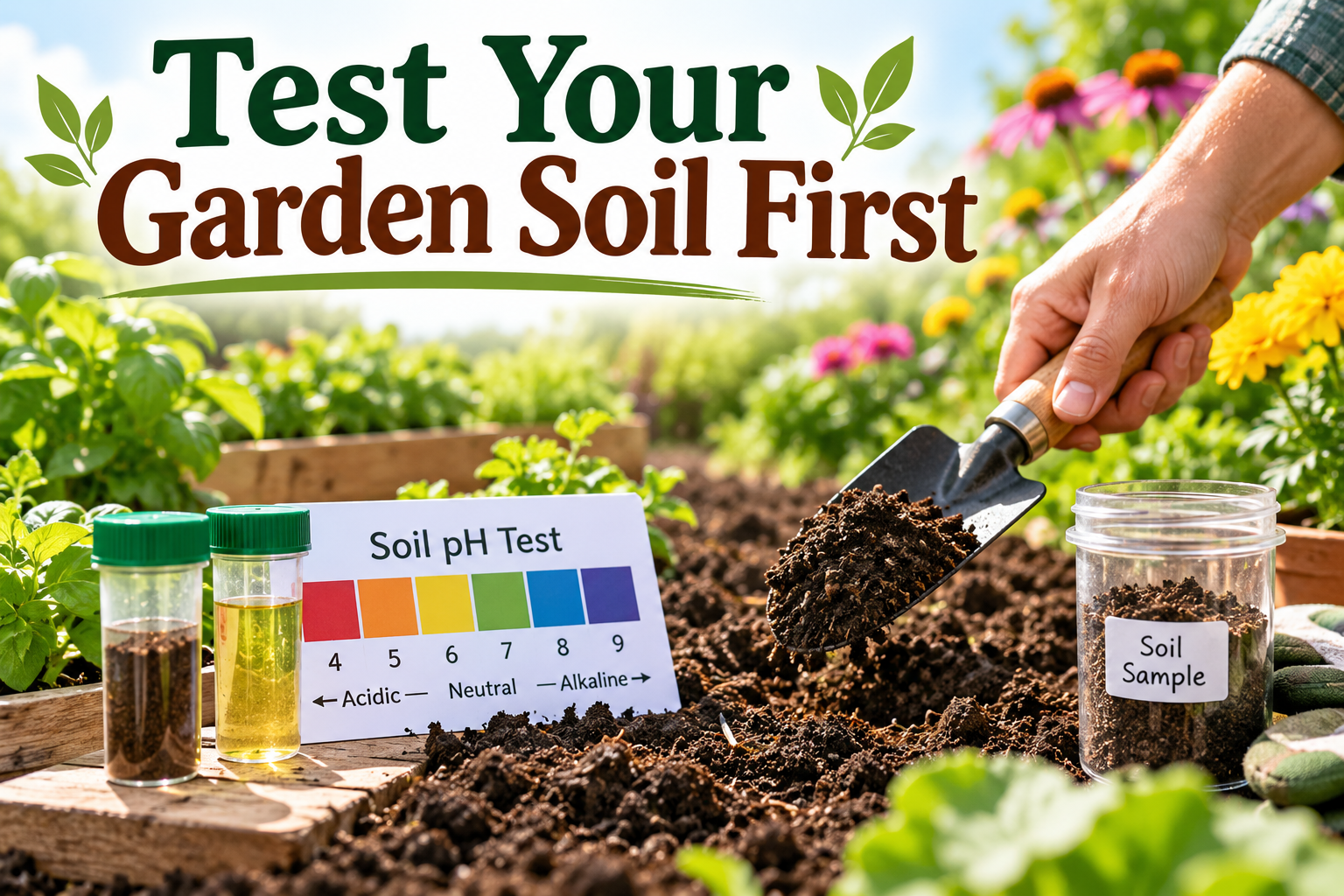
Before you add bags of compost, fertilizer, lime, or other amendments, find out what your soil actually needs. Guessing can waste money, and adding too much of the wrong material may create new problems instead of improving your garden.
A soil test is one of the smartest first steps when dealing with poor garden soil. It can tell you important details such as your soil’s pH and nutrient levels. With this information, you can make better decisions instead of treating every soil problem the same way.
Your garden may already be giving you warning signs. Weak or slow plant growth, yellowing leaves, poor drainage, hard ground, and plants that struggle year after year can all suggest that something is wrong. However, these signs do not always tell you exactly what the problem is. Yellow leaves, for example, can have several causes, so it is better to test the soil before assuming it needs more fertilizer.
How to Test Your Garden Soil
For a more representative sample, collect small amounts of soil from several spots within the same garden area and mix them together in a clean container. Avoid unusual spots, such as directly beside a compost pile or recently fertilized area.
If you have areas with different uses or growing conditions, test them separately. Your vegetable beds, flower garden, and lawn may not have the same soil needs.
A basic home soil test kit can be useful for an initial check. For more detailed and reliable information, consider sending a sample to a professional or local soil-testing laboratory. Once you receive the results, use them to determine whether your garden needs particular nutrients, organic matter, or a pH adjustment.
🌱 Beginner Tip
Never add lime, fertilizer, or large amounts of soil amendments simply because they worked in someone else’s garden. Every garden is different. Testing first helps you give your soil what it actually needs rather than what you think it needs.
Think of a soil test as a health check for your garden: understand the problem first, then choose the right natural solution.
2. Test Your Garden Soil First
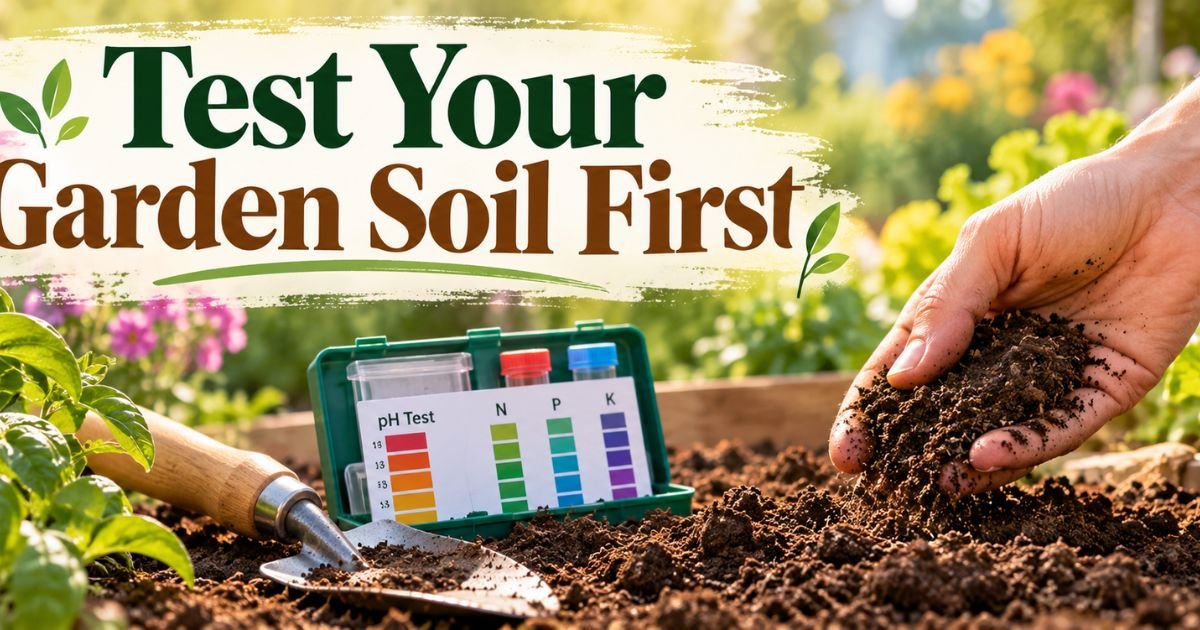
If your garden soil feels tired, hard, or unable to support healthy plants, finished compost can help rebuild it from the ground up. Instead of giving plants a quick boost like some fertilizers, compost adds organic matter that gradually improves the condition of the soil itself.
Finished compost is fully decomposed organic material. Good compost usually looks dark and crumbly, smells earthy, and no longer clearly resembles the food scraps, leaves, or other materials used to make it. It should also be relatively cool. Fresh, hot, or partly decomposed material is not the same as finished compost and should not automatically be used around growing plants.
Why Compost Helps Poor Garden Soil
Finished compost adds valuable organic matter and creates better conditions for beneficial soil organisms. Over time, this can improve soil structure and make the ground easier for plant roots to grow through.
It is useful for different soil types, too. In sandy soil, organic matter can improve the soil’s ability to hold water and nutrients. In heavier soils, compost can help improve structure and make the soil easier to work over time.
As compost continues to break down, it also slowly returns nutrients to the soil. However, think of compost primarily as a soil-building material, not as an excuse to keep adding more nutrients than your garden needs.
How to Add Compost to Garden Soil
For a new garden bed, spread a modest layer of mature compost across the surface and gently mix it into the upper soil when appropriate. You do not need to dig deeply or completely replace your existing soil.
In an established vegetable or flower bed, finished compost can also be applied as a top-dressing around plants. Spread it over the soil surface while keeping excessive material away from plant stems.
Remember that more is not always better. Repeated heavy applications can cause certain nutrients to build up. If you have used compost regularly for several years, a soil test can help you decide whether your garden still needs additional amendments.
Always choose mature compost from a reliable source or use homemade compost that has completely finished decomposing. Fresh manure, partly rotted kitchen scraps, and hot unfinished compost should not be treated as finished compost around actively growing plants.
🌱 Beginner Tip
Before using compost, look at it, smell it, and feel it. Finished compost should be dark, crumbly, relatively cool, and smell pleasantly earthy—not sour or rotten. If you can still recognize lots of fresh ingredients or the pile is noticeably hot, give it more time to mature.
Used wisely, finished compost does more than feed plants—it helps create healthier soil that can support your garden season after season.
3. Mix in Organic Matter
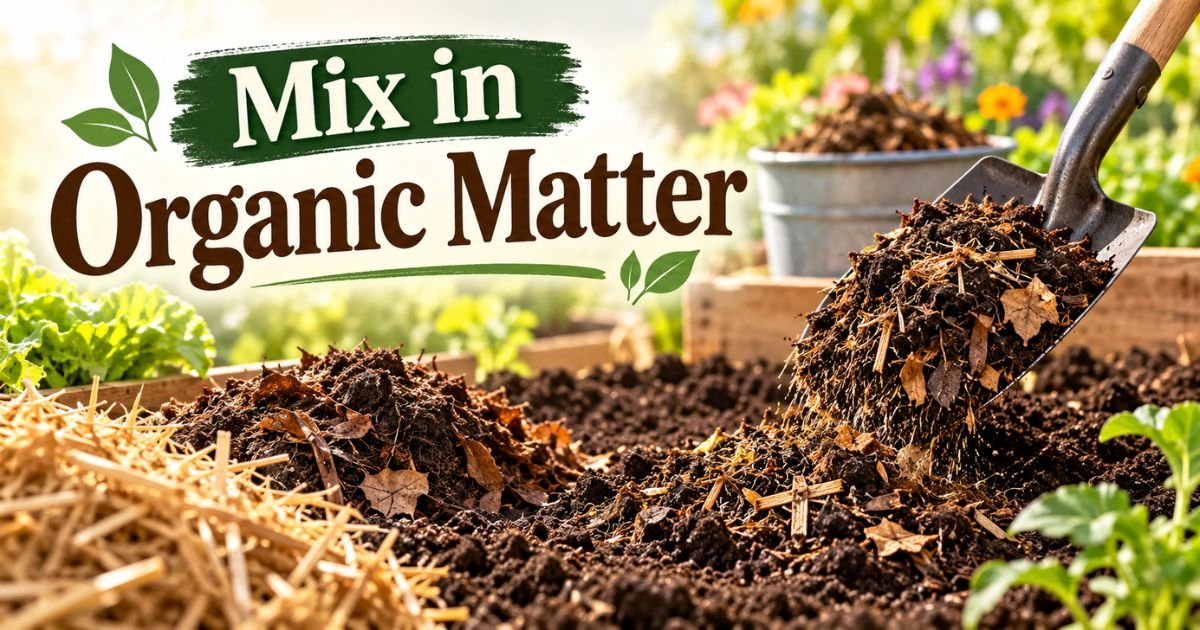
Poor garden soil does not always need more fertilizer. Sometimes, what it really needs is more organic matter to improve its structure, moisture balance, and living environment. By regularly returning natural materials to the soil, you can gradually turn difficult ground into a healthier place for roots to grow.
Organic matter simply means materials that come from plants or animals and naturally break down over time. Besides finished compost, gardeners can use shredded autumn leaves, leaf mold, properly aged manure, untreated grass clippings, healthy chopped plant residues, and residues from cover crops.
Why Organic Matter Helps Your Soil
Different soils benefit in different ways. Sandy soil drains quickly and can struggle to hold water and nutrients. Adding organic matter helps it retain more moisture and creates better conditions around plant roots.
Heavy or compacted soil can also benefit as organic materials decompose and contribute to better soil structure and workability over time.
Organic matter also feeds the life beneath your garden. Earthworms, fungi, bacteria, and other soil organisms help break down natural materials and recycle nutrients. Supporting this underground community is an important part of building healthy soil naturally.
How to Add Organic Matter to Garden Soil
You do not need to transform your soil overnight. Small, regular additions are usually more practical than one huge application.
Shredded leaves, leaf mold, grass clippings, and similar materials can often be spread over the soil surface as mulch. Suitable, well-decomposed materials can also be gently worked into the upper soil when preparing an empty garden bed.
For example, instead of throwing away healthy autumn leaves, shred them and use them around your plants or allow them to break down into leaf mold. Healthy plant residues can also be returned to the garden rather than automatically going into the trash.
What Should You Avoid?
Not every natural material belongs in your garden soil. Avoid adding diseased plants, weeds loaded with mature seeds, pet waste, contaminated materials, or large quantities of fresh manure directly to vegetable beds.
Be careful with fresh wood chips and other woody materials, too. When mixed directly into soil, their decomposition can temporarily reduce nitrogen availability near plant roots. They are generally more useful as a surface mulch than something to dig deeply into an active growing bed.
🌱 Beginner Tip
Improving soil does not have to be expensive. Fallen leaves and suitable plant material already available in your garden can become valuable resources instead of waste. Reuse what you safely can, add organic matter gradually, and let natural decomposition help improve your soil season after season.
4. Cover Bare Soil With Organic Mulch
Bare garden soil is vulnerable soil. When the ground is left uncovered, hot sun can dry it out, heavy rain can wash or compact the surface, wind can carry soil away, and weeds can quickly take advantage of the open space. Covering the ground with organic mulch creates a protective layer between your soil and the weather.
Organic mulch is simply natural material spread on top of the soil rather than mixed deeply into it. Unlike plastic or landscape fabric, materials such as shredded leaves, straw, untreated grass clippings, wood chips, pine needles, bark, and leaf mold gradually break down and return organic material to the soil.
Why Mulch Is Good for Garden Soil
A layer of mulch can slow water evaporation, helping the soil stay moist for longer between waterings. It also softens the impact of heavy rain, which can reduce erosion and prevent the soil surface from becoming hard and crusted.
Mulch can also help moderate soil temperature. During hot weather, it shades the ground, while in cooler conditions it can reduce sudden temperature changes around plant roots.
Another major benefit is weed control. By covering exposed soil and limiting light at the surface, mulch can make it harder for many weed seeds to establish.
As natural mulch slowly decomposes, earthworms and other soil organisms help process it, gradually adding organic material to the upper soil layer.
How to Mulch Garden Soil Correctly
Start by removing troublesome weeds. If the soil is very dry, water it before applying mulch so you are helping conserve moisture rather than covering already dry ground.
Spread the mulch evenly around your plants. The ideal depth depends on the material and where you are using it, so avoid assuming that a thicker layer is always better.
Most importantly, leave some space around plant stems, crowns, and tree trunks. Do not pile wet mulch directly against them, because constantly moist conditions around plant tissue can encourage decay and other problems.
Common Mulching Mistakes to Avoid
Avoid excessively deep mulch, diseased plant material, and thick piles of fresh grass clippings that can become wet and matted. Fresh wood chips are generally better used as surface mulch rather than being dug directly into actively growing vegetable beds.
Remember that mulch protects and gradually improves soil—it does not correct every soil problem overnight. Problems involving pH or nutrient imbalances may still require soil testing and targeted action.
🌱 Beginner Tip
Do not throw away all your autumn leaves. Shredded leaves can make an inexpensive organic mulch. Shredding helps prevent large leaves from forming a dense, matted layer and allows them to break down more easily.
Keeping soil covered is a simple habit, but over time it can help create a more stable, moisture-friendly, and biologically active garden environment.
5. Grow Cover Crops
One of the easiest ways to improve tired garden soil is to keep something growing in it. When a garden bed sits empty for weeks or months, rain and wind can wash or blow away valuable topsoil. Cover crops protect that bare ground while their living roots work below the surface.
Cover crops are plants grown mainly to protect and improve the soil rather than to produce a harvest. They are sometimes called green manure, particularly when the plants are cut down and their residues are returned to the soil.
Why Cover Crops Help Poor Soil
Growing cover crops can protect the soil from erosion, reduce surface crusting, and help limit compaction. Their roots create pathways through the soil, while roots and leaves eventually break down and add organic material.
Living roots also support beneficial soil organisms. Some cover crops can capture nutrients that might otherwise move out of the root zone, while dense growth can compete with weeds for light and space.
Legume cover crops, such as clover, field peas, and hairy vetch, have another useful feature. With the help of certain bacteria living in their root nodules, they can fix nitrogen from the air and bring biologically fixed nitrogen into the garden system.
Other useful choices include oats, annual ryegrass, and buckwheat. However, there is no single best cover crop for every garden. Your climate, season, soil conditions, and the amount of time before your next planting should guide your choice.
How to Grow Cover Crops
After harvesting vegetables, or whenever a bed will remain empty for several weeks or months, remove major weeds and lightly prepare the soil surface. Sow the seeds according to the requirements of your chosen crop, make sure they have good contact with the soil, and provide water as needed while they become established.
Plan how you will remove or terminate the crop before it produces mature seeds. Depending on the plant and your gardening method, you may cut it down and leave the residue on the surface as mulch, move the material to your compost pile, or gently incorporate suitable residues into the upper soil.
If you incorporate the plants, allow time for the material to begin decomposing before planting your next crop.
Some cover crops survive winter or become difficult to manage when allowed to mature. Always check when and how to terminate your chosen variety before sowing it.
🌱 Beginner Tip
Start with one small empty garden bed instead of covering your whole garden. Choose a cover crop suited to your local season, learn how it grows and how to terminate it, and expand to other beds once you are comfortable with the process.
Cover crops require a little planning, but they turn an otherwise empty bed into a living tool for protecting and gradually improving your garden soil.
6. Avoid Over-Tilling the Soil
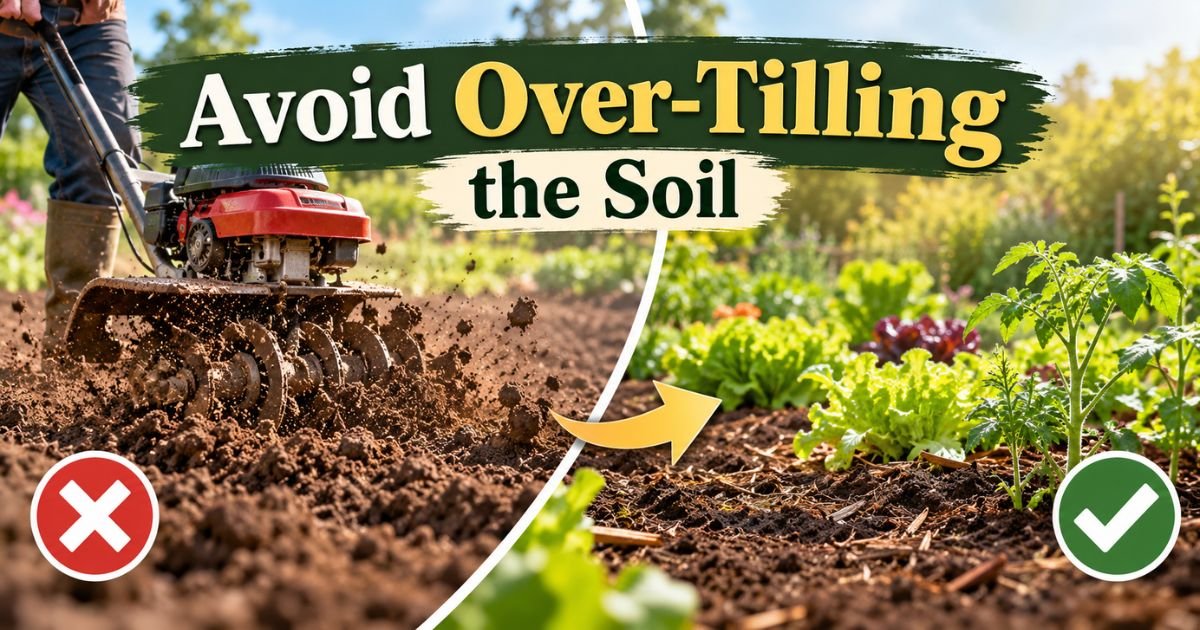
Freshly tilled soil may look soft, loose, and ready for planting, but repeatedly turning the soil can work against the healthy structure you are trying to build. Digging is not always bad. The key is to disturb your garden soil only when there is a good reason to do so.
Tilling simply means turning, digging, or mechanically breaking up the soil. It can be useful when creating a new garden bed, dealing with seriously compacted ground, or incorporating certain soil amendments. However, deeply tilling an established bed every season is often unnecessary.
Why Too Much Tilling Can Hurt Soil
Healthy soil naturally forms small clusters, or aggregates, that create spaces for air, water, and roots. Frequent or aggressive tilling can break apart this structure.
Repeated disturbance can also affect earthworms, beneficial microorganisms, and fungal networks living below the surface. These organisms play an important role in breaking down organic materials and supporting healthy soil.
Tilling can create other problems, too. Loose, uncovered soil is more exposed to erosion from wind and heavy rain. After rainfall, repeatedly worked soil may settle or form a crust at the surface.
Turning the soil can also bring buried weed seeds closer to sunlight, encouraging some of them to germinate. Frequent tillage may also speed up the breakdown and loss of soil organic matter over time.
How to Reduce Tilling in Your Garden
In an established bed, start by asking whether the entire area actually needs digging.
Instead of turning everything over, apply finished compost or suitable organic materials near the surface, protect the ground with mulch, and grow cover crops when beds would otherwise remain empty. These practices help build soil while reducing unnecessary disturbance.
If a small area feels firm, use a garden fork or hand tool to gently loosen it without completely turning the bed upside down. When planting, you may only need to create individual holes or shallow rows.
Also avoid digging or walking heavily on very wet soil. Wet soil is easier to compress, and working it at the wrong time can damage its structure.
Reduced-till gardening does not mean you can never dig. New beds, severely compacted areas, root crops, and specific soil problems may require more disturbance. The goal is simply to dig only as much as necessary.
🌱 Beginner Tip
Before turning over an entire garden bed, ask yourself: “Does this soil actually need to be dug?” If it is already loose enough for planting, make the holes or rows you need and leave the rest undisturbed.
By tilling less, you help protect the soil structure and biological activity that compost, organic matter, and cover crops are graduall
7. Improve Compacted Soil Naturally
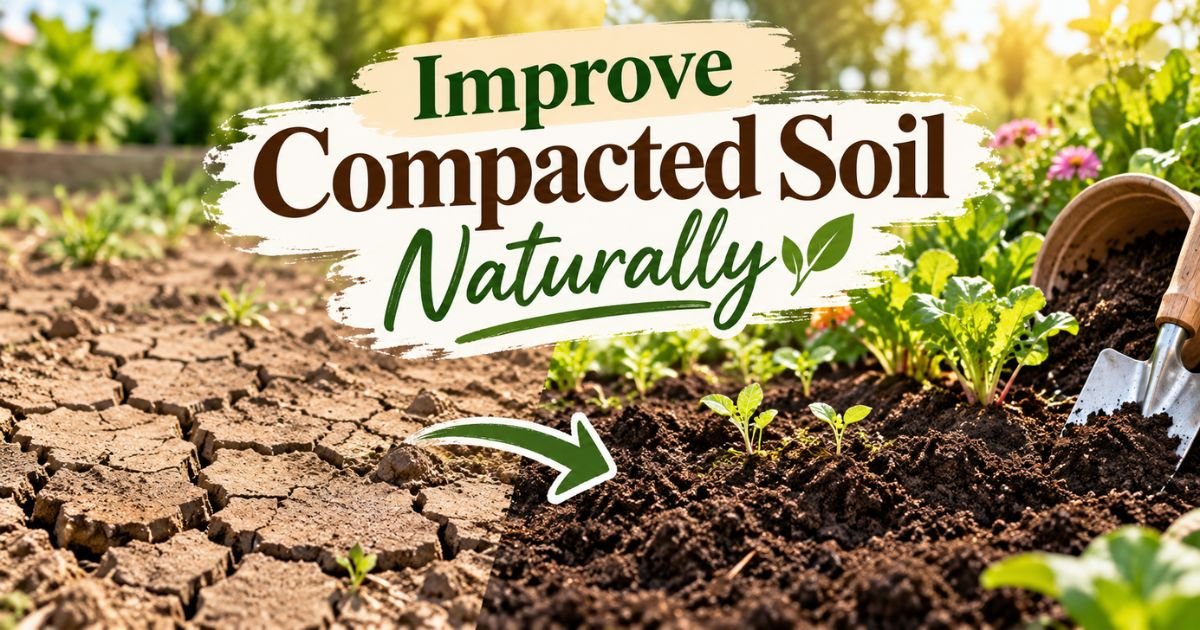
Plants can struggle even when the soil contains plenty of nutrients if the ground is too compacted for roots, water, and air to move through it easily. If your garden soil feels almost as hard as a path, adding more fertilizer may not solve the problem. The soil’s physical structure may need attention first.
Soil compaction happens when soil particles are pressed tightly together. This reduces the small spaces that normally hold air and water and give roots room to grow.
Common signs include water pooling on the surface, slow drainage, soil that becomes extremely hard when dry, and difficulty pushing a garden fork into the ground. Plants may develop shallow or restricted roots, grow slowly, or fail to establish in certain areas.
Compaction is often caused by repeatedly walking on garden beds, using heavy equipment, working the ground while it is very wet, or allowing soil to remain low in organic matter.
How to Loosen Compacted Soil Naturally
First, stop adding more pressure to the affected area. Create permanent paths and avoid walking directly on growing beds, especially when the soil is wet.
For moderately compacted soil, push a garden fork into moist soil and gently rock it backward and forward. Move a short distance and repeat. This can create spaces in the soil without turning the entire bed over, which fits well with a reduced-till approach.
You can also apply finished compost and suitable organic matter near the surface. Over time, these materials support better soil structure and biological activity. Organic mulch can protect the surface from pounding rain and repeated drying while gradually contributing organic material as it breaks down.
Living roots can help, too. Cover crops and plants with deep or fibrous root systems create natural channels as their roots move through the soil. When those roots eventually die and decompose, the channels can remain and contribute organic material below the surface.
Remember that severely compacted soil will not recover overnight. Construction-compacted ground, deeply compressed subsoil, or serious drainage problems may require more targeted solutions.
Prevent Soil From Becoming Compacted Again
Prevention is easier than repeatedly repairing compacted soil. Use permanent paths, stepping stones, or narrow garden beds that you can reach from the sides. Avoid driving equipment over growing areas and do not heavily work wet soil.
🌱 Beginner Tip
Push a garden fork or sturdy trowel into moist, but not waterlogged, soil. If it is unusually difficult to insert in several places, compaction may be part of the problem. One hard spot does not necessarily mean your entire garden is compacted.
With less foot traffic, living roots, organic materials, and patience, compacted soil can gradually become more open, workable, and welcoming to plant roots.
8. Keep Living Roots Growing
Healthy soil benefits from more than what you spread on top of it—living roots are constantly working below the surface. When possible, keeping plants growing in your garden helps support an active underground ecosystem and reduces the amount of time your soil sits bare.
Living roots interact closely with the soil around them. Plants release small amounts of carbon-rich compounds through their roots, which provide food for bacteria, fungi, and other microorganisms living in the root zone. In return, this active soil community plays an important role in nutrient cycling and overall soil health.
Roots also create tiny pathways as they grow through the ground. These channels can help improve soil structure and provide spaces for air and water movement. When old roots eventually die and decompose, they leave organic material directly below the soil surface.
Growing plants also capture nutrients that might otherwise be lost and, together with their leaves and stems, help protect the soil from erosion.
How to Keep Living Roots in Your Garden
You do not need to keep the same plants growing all year. Instead, look for opportunities to reduce long periods when your beds are completely empty.
After harvesting one crop, plant the next seasonal crop when conditions are suitable. Succession planting is a simple way to do this. For example, after a summer vegetable finishes producing, you might plant a suitable cool-season vegetable rather than leaving the bed bare for several months.
Healthy perennial plants can keep roots in the ground for longer periods in suitable parts of the garden. If a vegetable bed will remain unused for an extended time, a cover crop is another useful option.
Your local climate should guide these decisions. Water availability, temperature, crop rotation, disease problems, and the normal growing season all affect what can realistically grow.
Keeping living roots does not mean every inch of your garden must contain plants throughout the entire year. It is simply about avoiding unnecessary periods of bare soil when growing something useful is practical.
Also, do not leave seriously diseased plants in place just to maintain root coverage. Remove affected plants when necessary to help prevent disease problems from continuing or spreading.
🌱 Beginner Tip
Look at your gardening calendar and find one long period when a bed normally stays empty. Instead of changing your whole garden, fill that single gap with a suitable seasonal vegetable, cover crop, or other appropriate plant.
Over time, keeping more living roots in the ground can help create a more active, protected, and naturally resilient garden soil.
9. Feed and Protect Soil Life
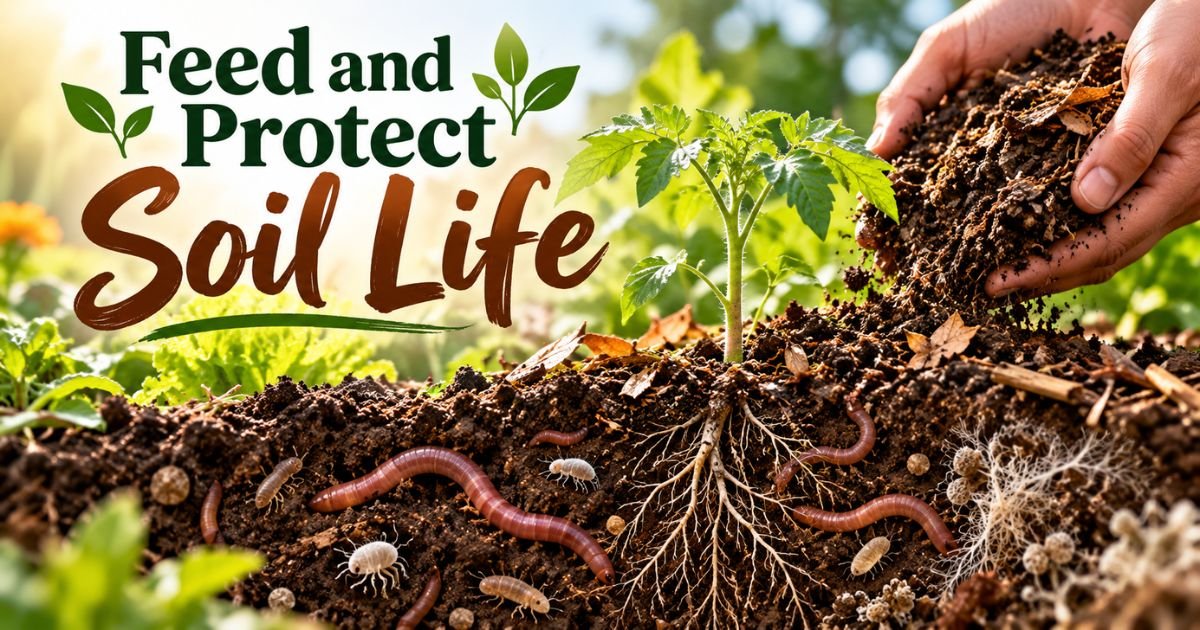
Healthy garden soil is not lifeless dirt—it is a living ecosystem filled with organisms working below the surface. Improving poor soil naturally is not only about adding nutrients. It also means creating an environment where beneficial soil life can survive, feed, and interact with plant roots.
Soil life includes earthworms, bacteria, fungi, tiny insects, and many other microorganisms. Some are too small to see, but together they play important roles in how soil functions.
These organisms help break down dead leaves, roots, and other organic materials. During this process, nutrients are recycled through the soil. Soil organisms can also contribute to better soil structure, while earthworms and growing roots create spaces that help air and water move through the ground.
You do not necessarily need expensive products to support this underground community. A better starting point is providing organic materials, suitable moisture, living roots, and protection from unnecessary disturbance.
How to Support Healthy Soil Life
Return suitable organic materials to your garden regularly rather than leaving the soil without a source of organic material. Keep the surface covered with organic mulch, such as shredded leaves or other appropriate plant-based materials.
Mulch is especially helpful because it reduces moisture loss and buffers the soil surface from rapid temperature changes. As organic mulch gradually decomposes, it also provides material that soil organisms can break down.
Keep living roots growing when practical, avoid unnecessary deep tilling, and prevent severe compaction by limiting foot traffic on growing beds. During the growing season, water appropriately rather than allowing planted soil to repeatedly become extremely dry.
Fertilizers and other garden products should also be used according to actual need and label directions. Adding more than necessary does not automatically create healthier soil.
This does not mean every organism in your garden is helpful. Some insects, fungi, and other organisms can damage plants or cause disease. Manage genuine problems when necessary, but avoid disturbing the entire soil ecosystem without a clear reason.
Do You Need Soil Microbe Products?
Garden centers may sell products containing beneficial bacteria, soil microbes, or mycorrhizal fungi. These products are not automatically necessary for every garden.
For beginners, building good soil conditions is a practical place to start. Organic matter, living roots, appropriate moisture, mulch, and less unnecessary disturbance can all support naturally occurring soil organisms.
🌱 Beginner Tip
When gently working in moist soil, look for earthworms and decomposing organic material. Finding earthworms does not prove that your soil is perfectly healthy, but their presence can be one visible sign that the soil provides habitat for living organisms.
Ultimately, improving poor soil is not about one quick fix. Compost, organic matter, mulch, living roots, reduced tillage, and protection from compaction work together to create better conditions for soil life—and healthier soil can provide a stronger foundation for your
Frequently Asked Questions
What is the best way to improve poor garden soil naturally?
Start by testing your soil so you know its pH and nutrient levels. From there, improve it gradually with finished compost, suitable organic matter, mulch, living roots, and less unnecessary soil disturbance. The best approach depends on what your soil actually needs.
How long does it take to improve poor garden soil?
Some changes may become noticeable within one growing season, but building healthy soil is usually a gradual process. Regularly adding organic materials, protecting the soil surface, and preventing compaction can improve soil structure and fertility over several seasons.
Can I improve garden soil without using chemical fertilizers?
Yes. Compost, aged organic materials, cover crops, mulch, and healthy soil-management practices can all support soil fertility naturally. However, a soil test can help determine whether your garden has a specific nutrient deficiency that needs attention.
How can I improve hard, compacted garden soil?
Avoid walking on growing beds, especially when the soil is wet. For moderate compaction, gently loosen the ground with a garden fork without completely turning it over. Adding organic matter, using mulch, and growing plants with active root systems can gradually improve soil structure.
Is compost enough to improve poor soil?
Compost is useful, but it should not be treated as the only solution. Healthy soil also benefits from living roots, organic mulch, reduced tillage, appropriate moisture, and protection from compaction. Too much compost can also lead to excessive nutrient levels.
What organic matter can I add to garden soil?
Useful materials include shredded leaves, leaf mold, properly aged manure, suitable grass clippings, healthy plant residues, and cover-crop residues. Avoid pet waste, diseased plants, contaminated materials, and large amounts of fresh manure in vegetable beds.
Should I till my garden every year?
Not necessarily. Repeated deep tilling can disturb soil structure and beneficial organisms. If an established bed is already workable, you may only need to loosen small areas for planting rather than turning over the entire bed each season.
How do I know if my garden soil is getting healthier?
Look for several signs rather than relying on just one. Healthier soil may become easier to work, absorb water more effectively, support stronger root growth, and contain visible soil life such as earthworms. Plant performance may also improve, while occasional soil testing can help track changes in pH and nutrient levels.
Conclusion
Learning how to improve poor garden soil naturally does not require expensive products or overnight solutions. Start by understanding your soil, then gradually improve it with compost, organic matter, mulch, living roots, and simple practices that protect its structure and beneficial soil life.
Healthy soil takes time to build, so focus on small and consistent improvements rather than trying to fix everything at once. With patience and proper care, even poor garden soil can become a healthier foundation for strong roots, thriving plants, and better harvests season after season.
