

Gardening tips for beginners can make starting a new garden much easier. You may not know which plants to choose or where to grow them. You may also have questions about soil, water, and sunlight.
The good news is that gardening does not have to be difficult. A few simple steps can help your plants grow strong and healthy. These 15 gardening tips will help you start your garden, avoid common mistakes, and care for your plants with confidence.
1. Choose the Right Location for Your Garden 🌱
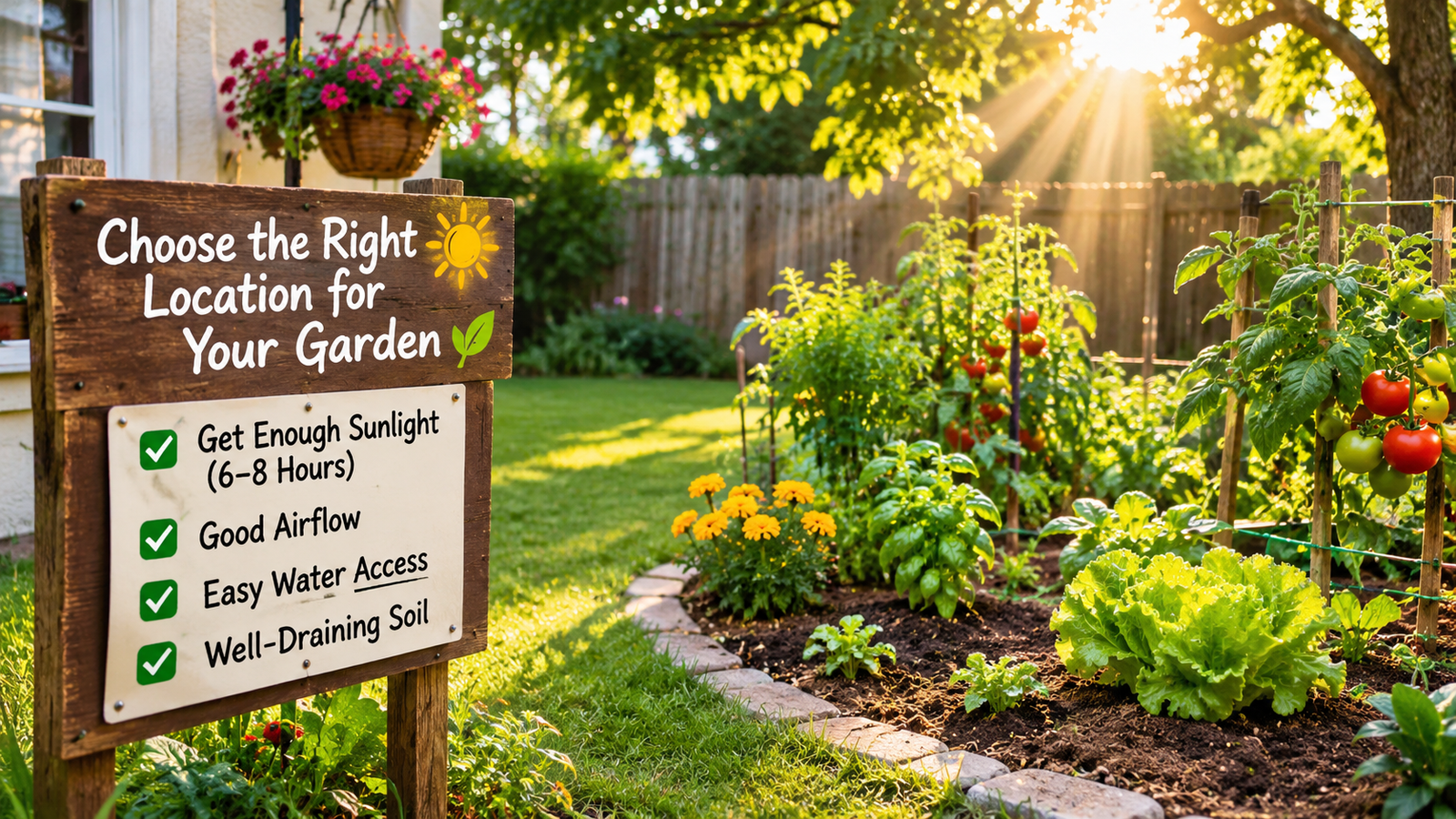
Choose a spot that gets enough sunlight each day. Make sure water is easy to access. The soil should also have good drainage. Give your plants enough space to grow without crowding.
2. Understand Your Garden Soil
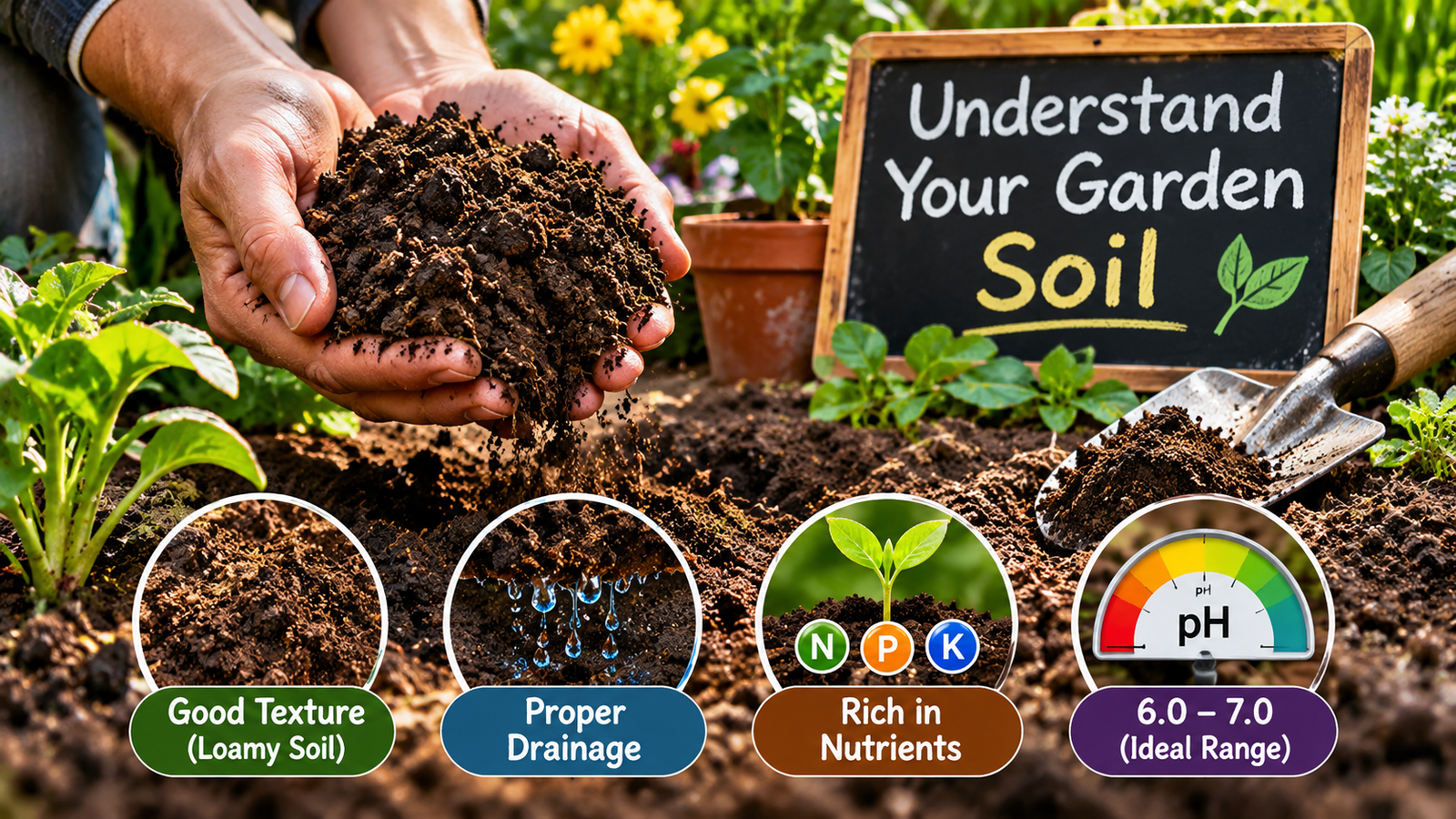
Healthy soil helps plants grow strong. Check that your soil can hold enough moisture but also drain extra water. Good soil should provide nutrients for plant growth. You can also check the soil pH to understand which plants will grow well in it.
3. Choose the Right Plants
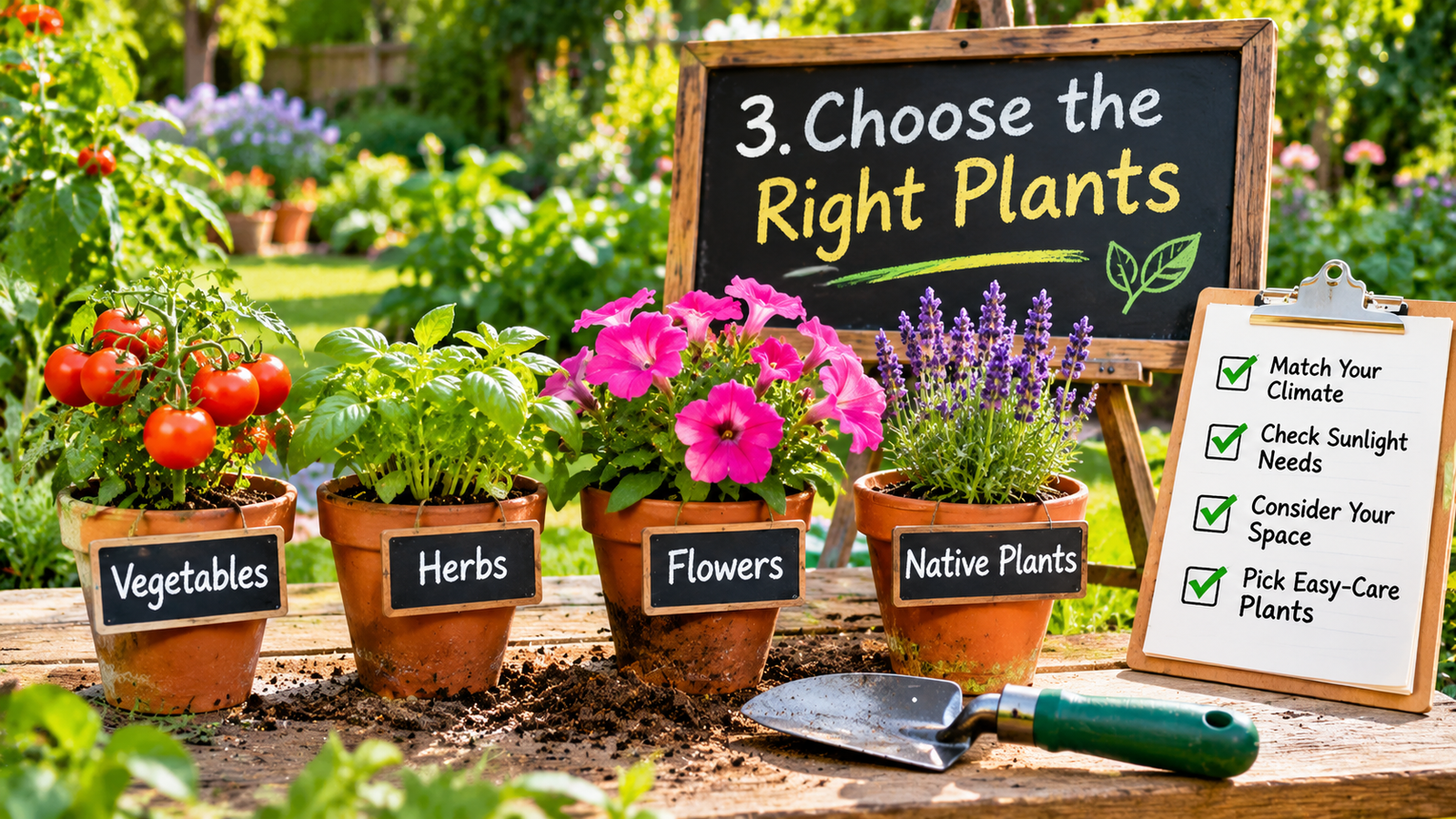
Choose plants that grow well in your local climate. Check how much sunlight and space each plant needs. Pick plants that match your garden conditions. Beginners should start with plants that are easy to grow and care for.
4. Know Your Growing Season
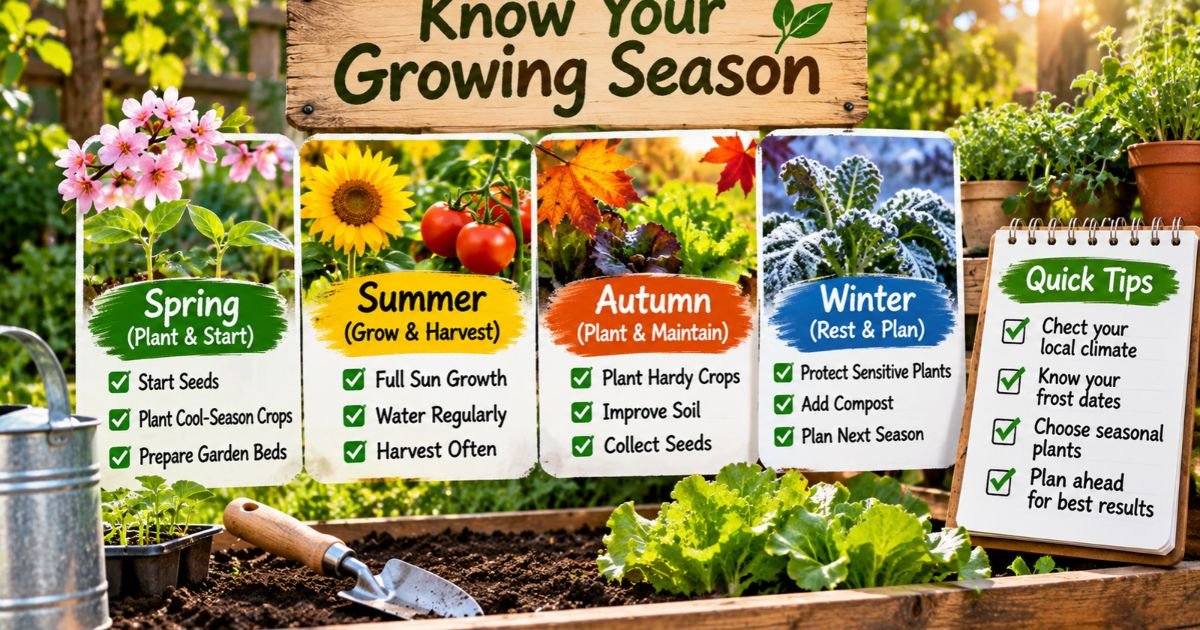
Learn the best growing season for your plants. Some plants grow better in warm weather, while others prefer cooler conditions. Planting at the right time helps seeds and young plants grow well.
5. Start with Seeds or Seedlings
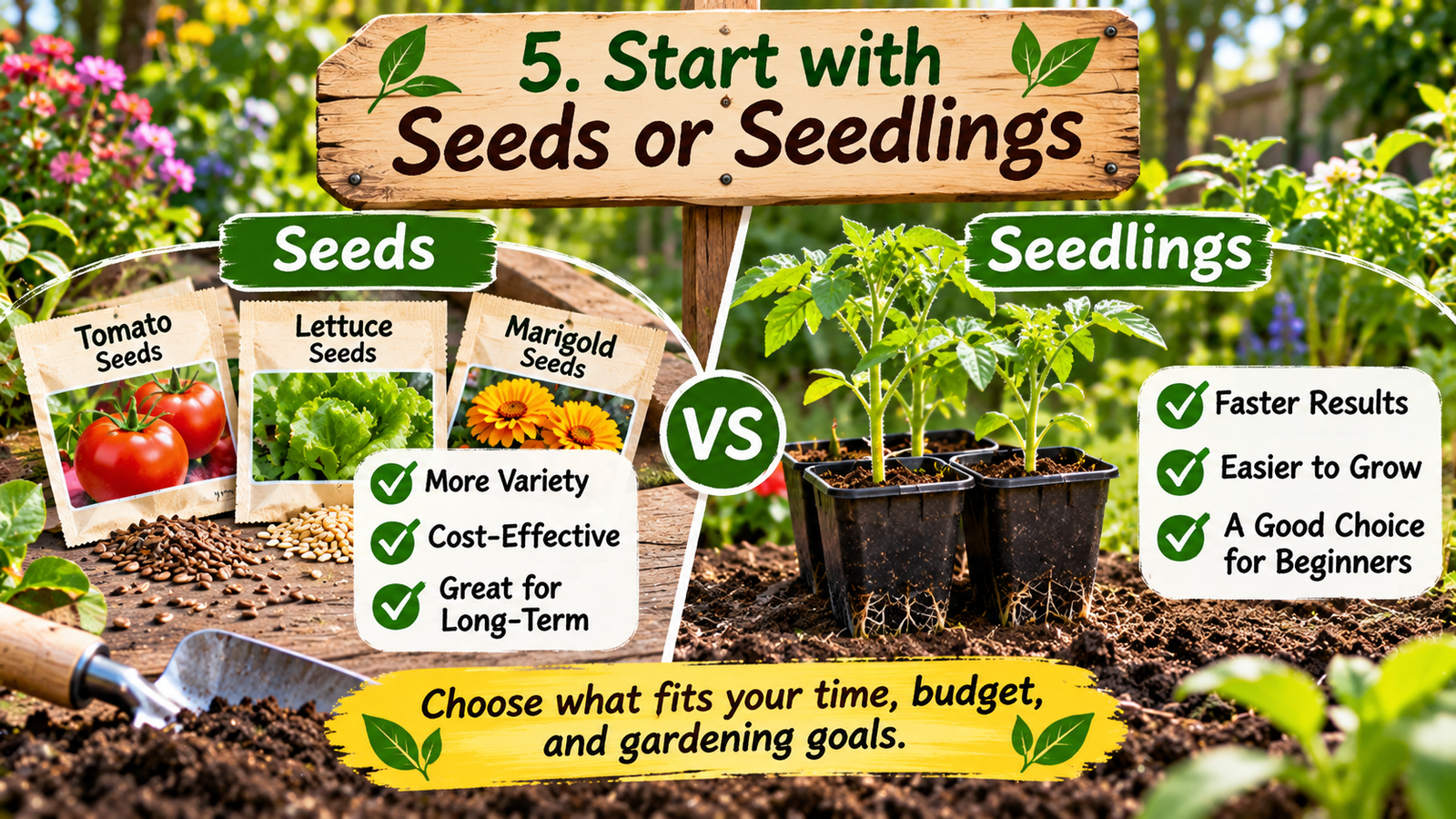
You can start your garden with seeds or young seedlings. Seeds are usually cheaper and offer more plant choices. Seedlings are easier for beginners because they have already started growing. Choose the option that works best for your time, budget, and experience.
6. Give Plants Enough Sunlight ☀️
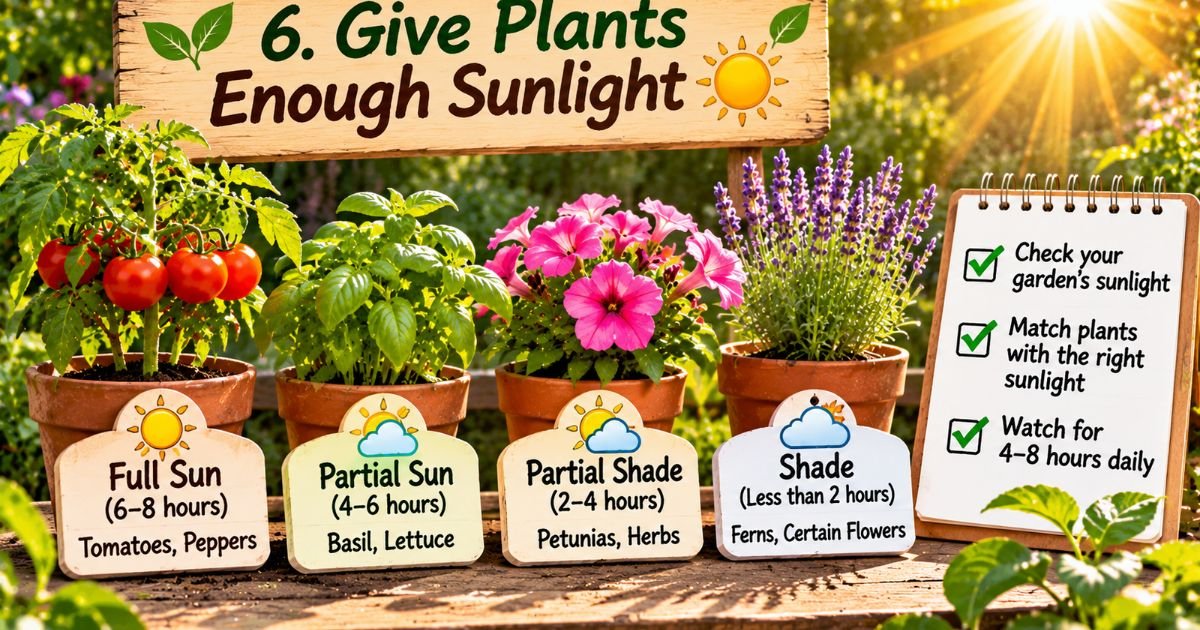
Most plants need enough sunlight to grow strong and healthy. Check how much sunlight each plant needs before choosing its location. Some plants prefer full sun, while others grow better in partial shade. Watch your garden during the day to see which areas receive the most sunlight.
7. Water Your Plants the Right Way 💧
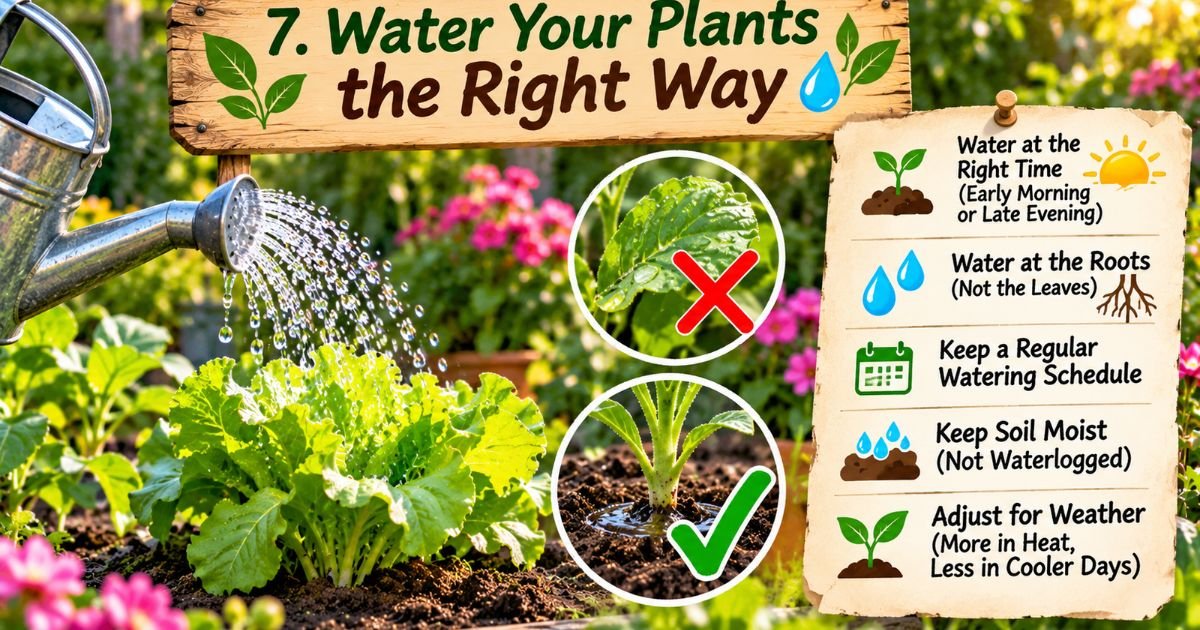
Water your plants when the soil starts to feel dry. Avoid giving them too much water, as wet soil can harm the roots. Water deeply so the moisture reaches the roots. Check your plants regularly because their water needs can change with the weather.
8. Give Plants Enough Space to Grow
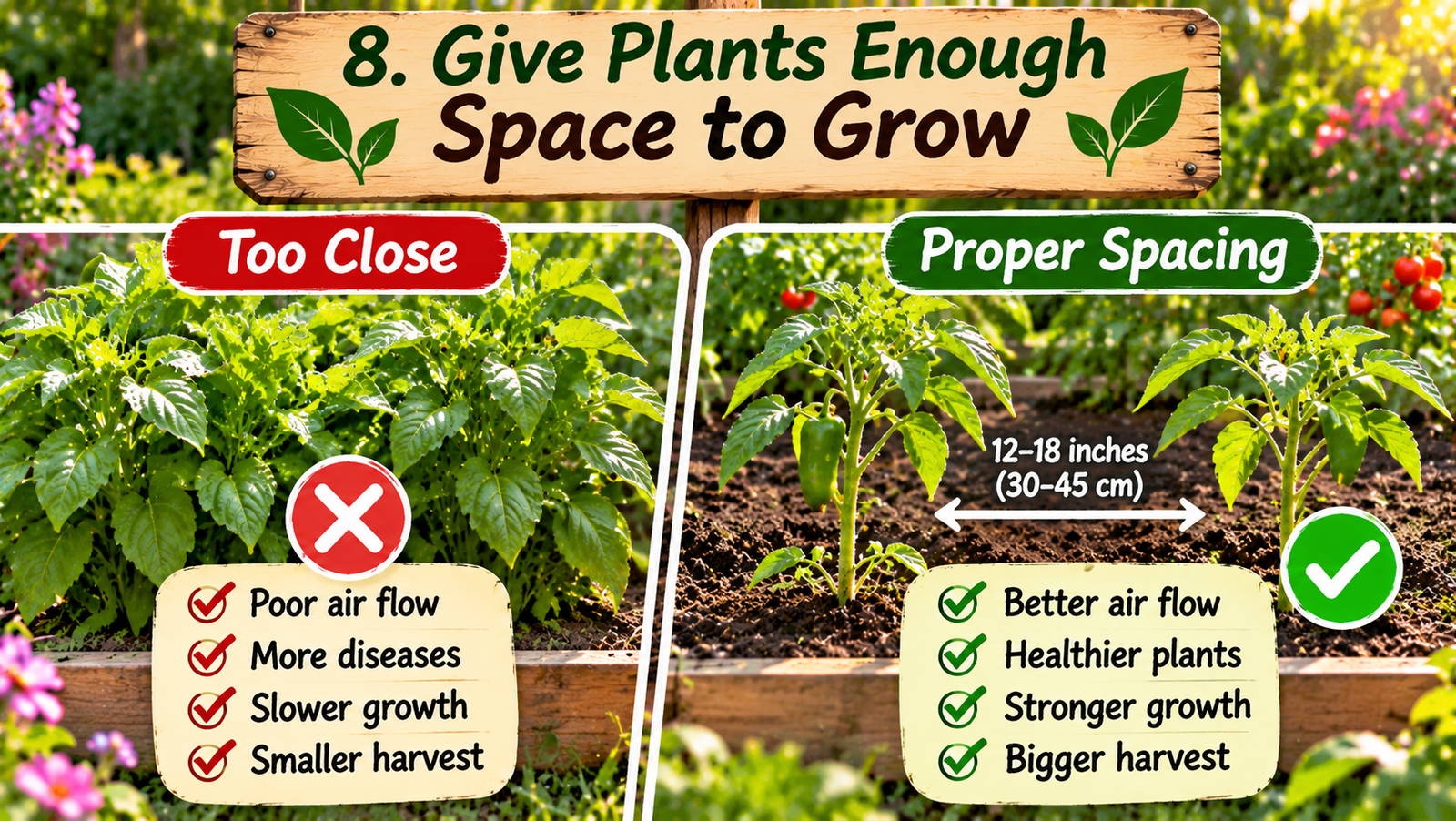
Plants need enough space to grow properly. Avoid planting them too close together. Proper spacing helps plants get enough sunlight, water, and nutrients. It also improves airflow around the leaves.
9. Add Compost to Improve the Soil
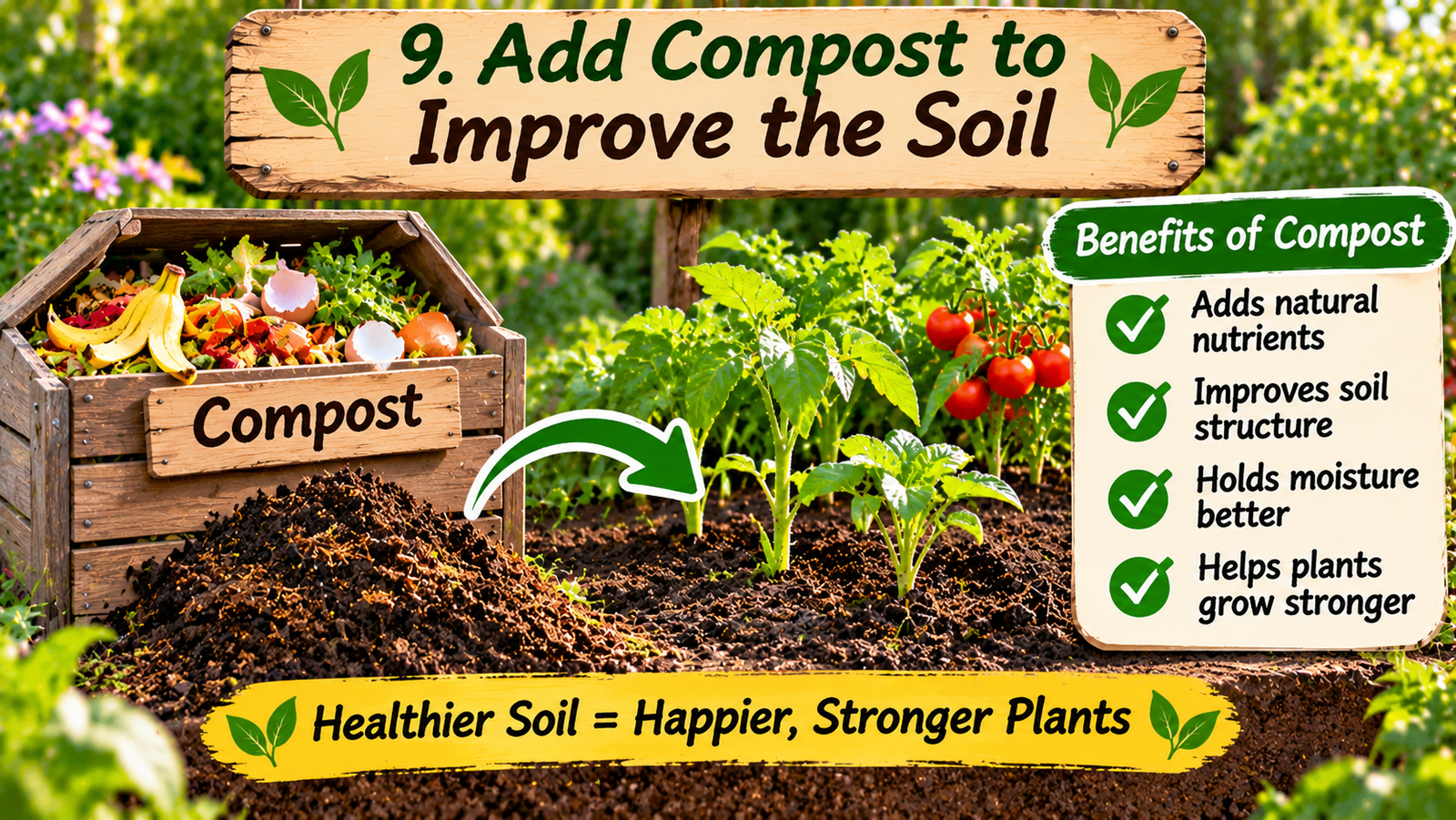
Compost adds organic matter and nutrients to the soil. It can improve soil structure and help the soil hold moisture. Mix compost into your garden soil before planting or add it around established plants. Healthy soil helps plants grow stronger.
10. Use Fertilizer Carefully
Fertilizer provides nutrients that help plants grow. Use the right type and amount for your plants. Too much fertilizer can damage roots and cause poor plant growth. Always follow the instructions on the fertilizer package and avoid using more than recommended.
11. Add Mulch Around Your Plants
Add a layer of mulch around your plants to protect the soil. Mulch helps the soil hold moisture and reduces the growth of weeds. It can also protect plant roots from changes in temperature. Leave a little space around the plant stem when adding mulch.
12. Control Weeds Before They Spread
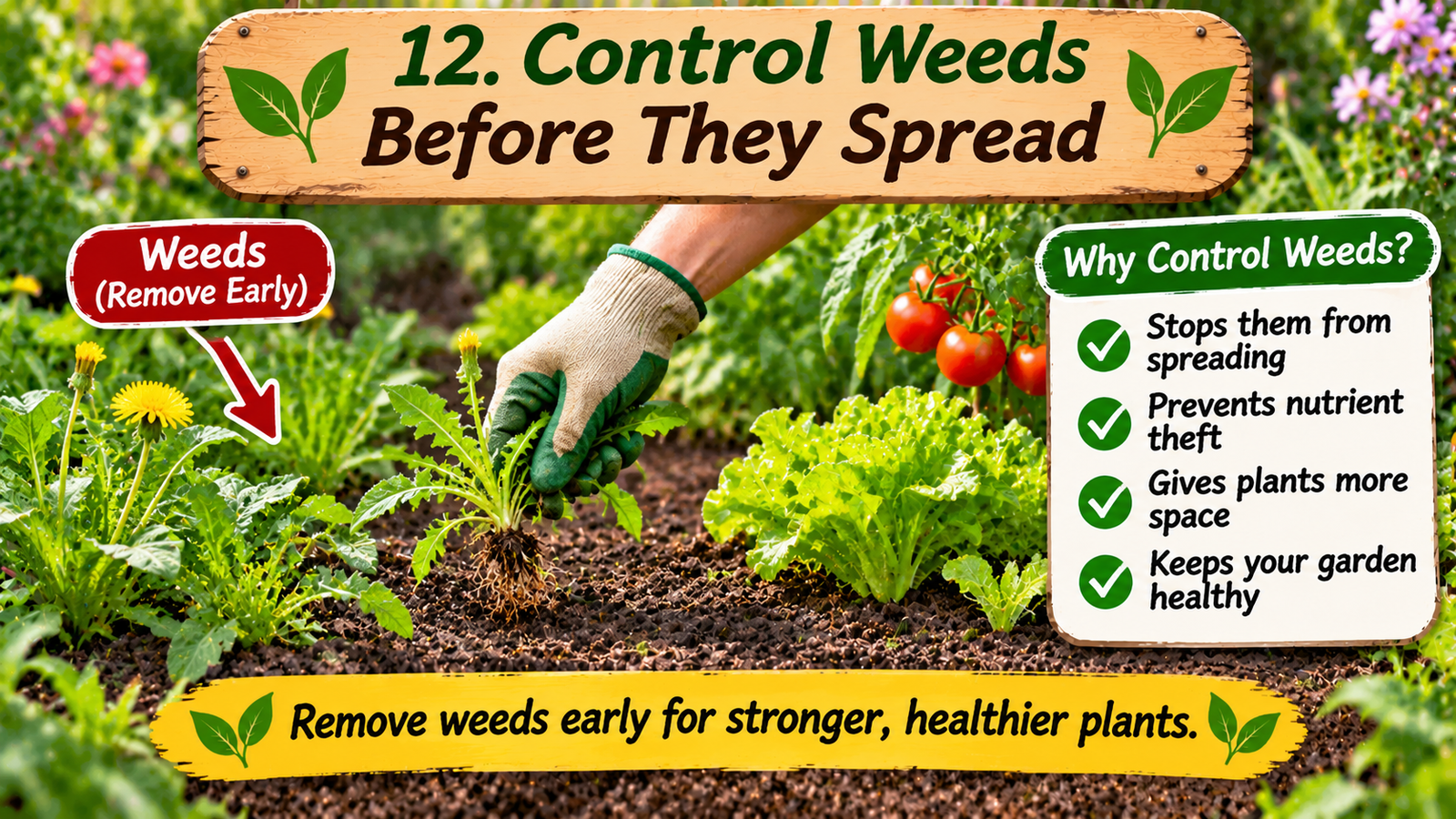
Remove weeds regularly before they grow and spread. Weeds compete with your plants for water, sunlight, and nutrients. Pull small weeds out by the roots when the soil is moist. Keeping weeds under control gives your plants more space and resources to grow.
13. Protect Your Garden from Pests
Check your plants regularly for signs of pests. Look for damaged leaves, small holes, or insects on the plants. Remove pests early before they spread and cause more damage. Keeping your garden clean and your plants healthy can also help reduce pest problems.
14. Prune Plants When Needed
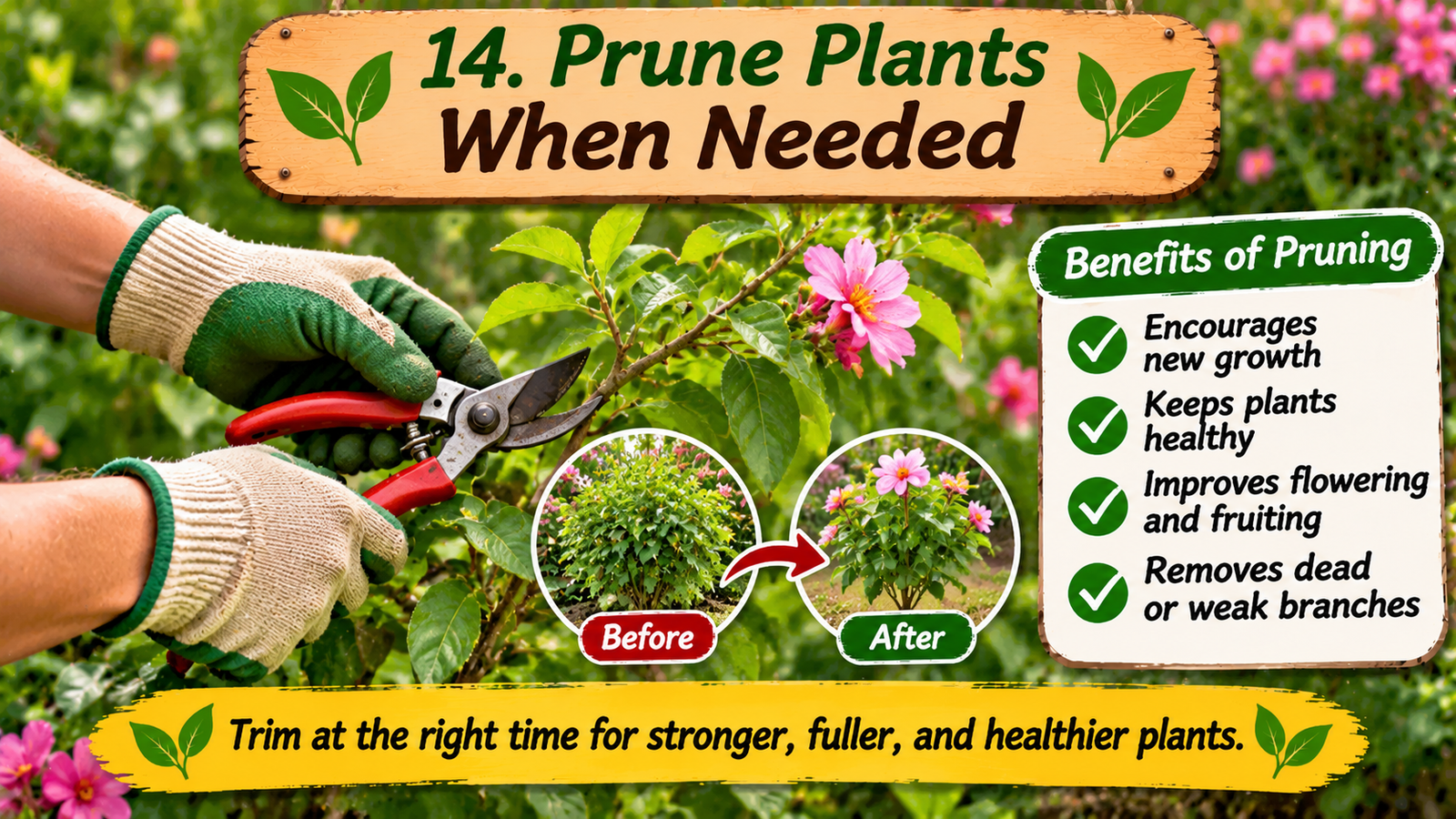
Remove dead, damaged, or diseased branches and leaves when needed. Pruning helps plants stay healthy and encourages better growth. It can also improve airflow and keep plants from becoming overcrowded. Avoid removing too much at once, as heavy pruning can stress the plant.
15. Check Your Garden Regularly
Check your garden regularly to make sure your plants stay healthy. Look at the soil, leaves, and stems for signs of problems. Check for dry soil, weeds, pests, or damaged leaves. Finding problems early makes them easier to control and helps your plants continue growing well.
Conclusion
Starting a healthy garden takes time, but it does not have to be difficult. Focus on the basics, such as good soil, enough sunlight, proper watering, plant spacing, and regular care. Pay attention to your plants and solve small problems before they become bigger ones.
Start with a few easy plants and learn as your garden grows. With patience and consistent care, you can build a healthy garden and enjoy the experience of growing your own plants. 🌱
